
April 1, 2026
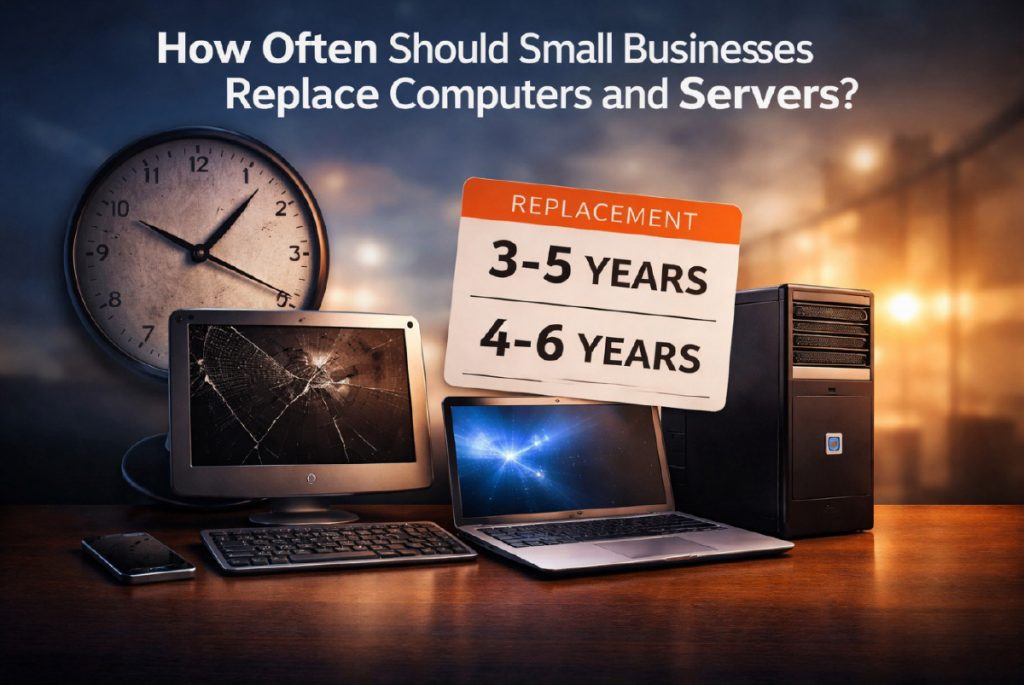
For most small businesses with 10–50 employees, desktop computers and laptops should usually be replaced every 3 to 5 years, while servers often need to be reviewed for replacement or major upgrade every 4 to 6 years depending on workload, security requirements, and reliability. Waiting too long to replace aging hardware can increase downtime, reduce productivity, and create avoidable cybersecurity risks.
Businesses across Central and Southeast Arkansas, including Little Rock, North Little Rock, Sherwood, and Pine Bluff, rely on structured technology lifecycle planning to keep systems reliable, secure, and cost-effective.
Understanding when to replace computers and servers helps business owners avoid emergency failures and plan more predictable IT spending.
The 4 Biggest Factors That Determine Replacement Timing
1. Age of the Equipment
As hardware ages, performance typically declines and the risk of failure increases.
For most businesses, the general replacement guideline looks like this:
- desktops: every 4 to 5 years
- laptops: every 3 to 5 years
- servers: every 4 to 6 years
These timelines vary depending on usage, maintenance, and system demands.
2. Security and Software Compatibility
Older devices often become harder to secure.
At some point, systems may no longer support:
- current operating systems
- security updates
- new business software
- modern authentication tools
This creates both operational and security problems.
3. Reliability and Productivity
When devices slow down, freeze, or fail unexpectedly, employee productivity suffers.
Businesses often underestimate how much time is lost due to:
- long boot times
- unstable systems
- recurring hardware issues
- outdated server performance
Replacing aging hardware at the right time helps reduce frustration and prevent bigger disruptions.
4. Budget Planning
Planned hardware replacement is almost always more cost-effective than waiting for a device to fail unexpectedly.
Businesses that follow a lifecycle strategy can spread costs out over time and avoid emergency purchases.
Our guide How Much Does Managed IT Cost in Little Rock? explains how businesses often plan predictable technology spending and support costs:
What Happens When Businesses Wait Too Long
Delaying hardware replacement can create a chain reaction of issues, including:
- higher support costs
- more downtime
- slower employee productivity
- increased cybersecurity exposure
- difficulty supporting modern applications
A reactive approach usually costs more in the long run.
Why Response Time Still Matters When Hardware Fails
Even with a good lifecycle plan, hardware problems can still happen unexpectedly.
Our guide What Should a Business Expect From a 24-Hour Onsite IT Guarantee? explains what businesses should expect when an IT provider needs to respond quickly to hardware or infrastructure issues:
Which Businesses Face Higher Hardware Risk
Some industries depend more heavily on reliable systems and secure infrastructure than others.
Our guide What Industries in Arkansas Are Most Targeted by Cyberattacks? explains why some organizations face greater operational and security risks and why infrastructure reliability matters even more in those environments:
Real Example: Government Agency
A government agency in Central Arkansas partnered with Mansour’s Computer Solutions after experiencing an email security breach. Without an internal IT department, they needed a reliable partner to secure their systems and provide dependable support.
The Mansour team responded the same day, resolved the issue quickly, and implemented stronger cybersecurity protections moving forward.
Their leadership shared the following feedback:
“Since partnering with Mansour’s Computer Solutions out of Little Rock, Arkansas, our company has seen a significant boost in both security and peace of mind. When we experienced an email breach, their team responded the same day, resolved the issue promptly, and gave us the confidence to entrust them with all our IT needs.
We had never worked with an IT firm before, and now we can't imagine needing anyone else. The team is responsive, professional, and genuinely committed to helping us succeed.
As a small business without an in-house IT department, Mansour’s has become an essential extension of our operations—keeping our systems secure and running smoothly. If you're on the fence, don’t be. Choosing Mansour’s was one of the best decisions we've made.”
— Government Agency Client, Central Arkansas
About Mansour Computers
Mansour Computers provides cybersecurity-focused managed IT services for small and midsize businesses throughout Arkansas, with a primary focus on Central and Southeast Arkansas.
The company regularly supports organizations across:
- Little Rock
- North Little Rock
- Sherwood
- Pine Bluff
- and surrounding Arkansas communities
With over 20 years of experience, Mansour Computers helps organizations with 10–50 employees maintain secure and reliable technology environments through proactive monitoring, cybersecurity protection, and predictable fixed-fee IT support.
Businesses without an internal IT department rely on Mansour Computers as a trusted technology partner to keep their systems secure and operating efficiently.
Book a Quick 10-Min Discovery Call Today!
If you're evaluating IT support for your business or want to improve your cybersecurity protection, schedule a quick discovery call with our team to discuss your needs and answer any questions.